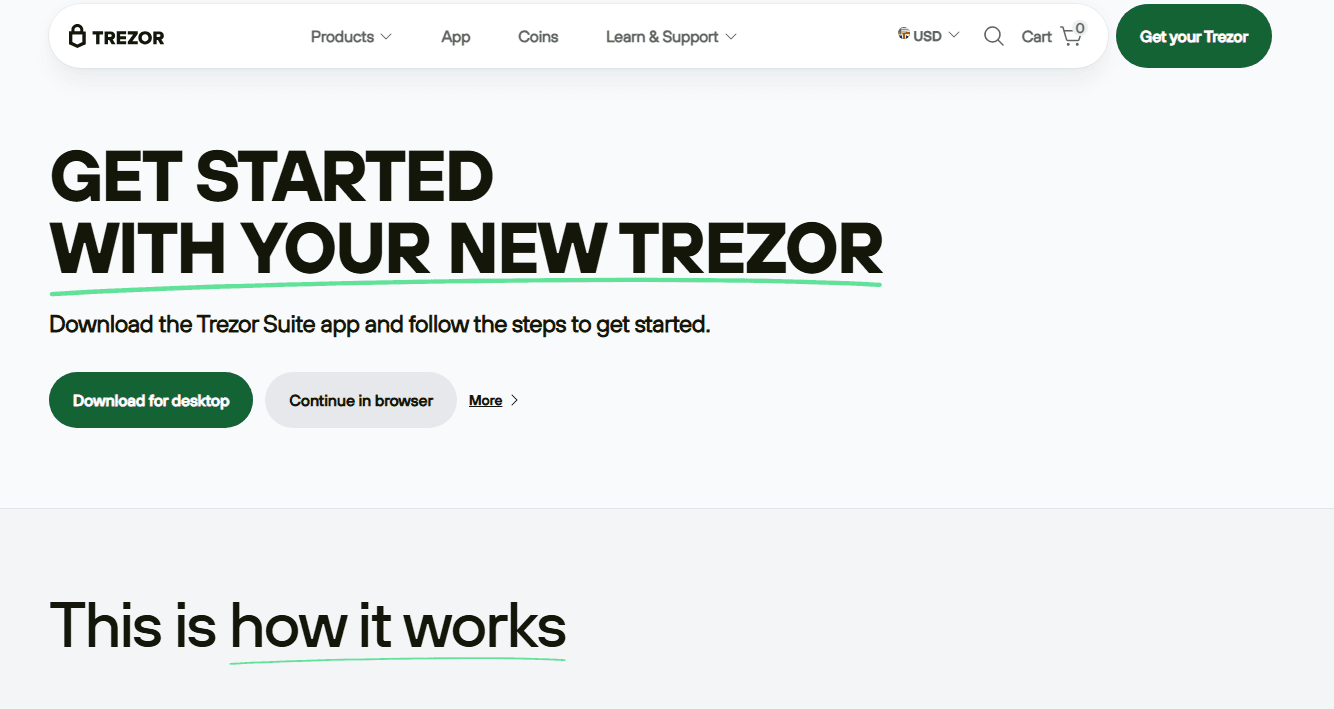
Trezor.io/Start – A Fresh 1200-Word Beginner-Friendly Guide for Setting Up Your Trezor Wallet
Starting your crypto journey with a Trezor hardware wallet begins with the essential onboarding process associated with the phrase trezor.io/start. This setup path is designed to help you initialize your device securely, generate your recovery seed, install the necessary software, and learn how to manage your digital assets with complete confidence. Trezor’s approach focuses on empowering users to hold full control over their private keys, ensuring that no third party ever has access to their funds.
Below is a completely new, detailed 1200-word guide explaining every step of the setup process, ensuring you understand not just how to begin, but why each stage matters for long-term security.
Understanding What Trezor.io/Start Represents
When people refer to “trezor.io/start,” they are essentially pointing you to the core instructions required to initialize a Trezor device—whether it’s Trezor Model One or Trezor Model T. This setup ensures that:
Only you generate your private keys
Your recovery seed is fully under your control
Your device is authenticated and secure
You use the official companion application, Trezor Suite
Your wallet is protected with PIN and optional passphrase
Your coins and tokens can be safely managed
This onboarding flow is the foundation that determines how securely your wallet will function throughout its lifetime.
Unboxing Your Trezor Device: What to Expect
When you open your Trezor box, you’ll typically find:
The hardware wallet itself
A USB cable
Two or more recovery seed cards
A quick start guide
A security-sealed package
Stickers or accessories depending on model
Before plugging in the device, take a moment to ensure the box and seals look untouched. Trezor devices are designed to arrive sealed with tamper-resistant packaging. If anything appears altered, it is safer to pause and investigate before moving forward.
Connecting Your Trezor and Beginning the Initialization
The first step in the setup process is connecting your Trezor to your computer. Use the cable included in the box to ensure compatibility. Once connected, the device screen will activate and prompt you to begin the initialization process.
You will be given two options:
Create a new wallet
Recover an existing wallet
If you are using a new device, choose the option to create a new wallet. This instructs the Trezor hardware to generate a completely new set of private keys inside the secure chip.
Installing Trezor Suite – Your Crypto Management Interface
Trezor Suite is the official application you use to interact with your hardware wallet. It functions as your portfolio dashboard, transaction tool, and device manager. It is available for desktop and can also be used in the browser if needed.
Once installed, open the application with your Trezor still connected. Trezor Suite will recognize your device and walk you through the next steps, including installing the latest firmware.
Firmware Installation – Updating Your Device for Security
Most new Trezor devices arrive without firmware, ensuring that you install it directly through Trezor Suite. Firmware updates include:
New security protections
Enhancements to device performance
Support for additional cryptocurrencies
Important patches for improved stability
During this process, your device will display a confirmation screen so you can manually approve the installation.
This manual confirmation is a critical part of Trezor’s security model—nothing important happens without your direct approval.
Creating Your Recovery Seed – The Most Important Step
Once the firmware is installed, Trezor will generate your recovery seed phrase. This is either a 12-word or 24-word sequence that represents your entire wallet backup. It is the one thing you must protect above all else.
Here’s how to handle your recovery seed safely:
Write the words exactly as shown in the correct order
Use the provided recovery cards or metal backup plates
Never store the seed phrase digitally
Never take photos or screenshots
Do not speak the words aloud near smart devices
Store multiple copies in secure locations
Trezor Suite will ask you to confirm your seed by selecting specific words. This helps ensure your backup is accurate.
Your recovery seed is your ultimate lifeline. If your Trezor device is lost, damaged, or reset, you can restore everything using these words.
Creating a Device PIN – Your First Layer of Protection
After recording your recovery seed, your next step is setting a PIN. This PIN locks the device and prevents unauthorized access.
Tips for choosing a secure PIN:
Avoid simple patterns like “1234”
Use at least 6–10 digits
Do not reuse PINs from other devices
Do not share the PIN with anyone
Your PIN is entered directly on the Trezor device, not on your computer, ensuring it cannot be captured by malware or keyloggers.
If the PIN is entered incorrectly too many times, the device will reset itself to protect your funds. You can then restore using your recovery seed.
Navigating Trezor Suite and Adding Your Crypto Accounts
Once your device is protected, Trezor Suite will guide you to create accounts. Each cryptocurrency requires its own dedicated account inside the app.
For example:
Bitcoin account
Ethereum account
XRP account
Litecoin account
ERC-20 token accounts
Adding these accounts allows Trezor Suite to generate receiving addresses and manage balances. Some blockchains require additional steps like enabling tokens or activating accounts, all handled inside the software.
Receiving Crypto – Verifying Addresses on Your Device
To receive crypto into your Trezor wallet:
Open Trezor Suite
Select your preferred account
Choose the receiving option
Display your receiving address
Confirm the address on your Trezor device screen
Share the verified address with the sender
The address verification step is essential. Even if your computer is compromised, the Trezor device will always show you the real receiving address. Only trust what the hardware device displays.
Sending Crypto – Approving Transactions Physically
When you send crypto, Trezor Suite prepares the transaction and then requires your hardware device to verify:
The amount
The destination address
The network fee
Your Trezor screen will show all transaction details, and you must physically confirm them before anything is broadcast to the blockchain.
This design eliminates risks from:
Malware
Phishing
Keyloggers
Browser manipulation
Clipboard hijackers
Your funds remain secure because no transaction can be approved without your manual confirmation.
Exploring Advanced Security Features
Trezor offers several advanced features for users who want extra layers of protection:
Passphrase Protection
A passphrase acts like a “wallet inside a wallet.” When enabled, entering the passphrase creates a new hidden wallet separate from your main one. Only someone who knows both the seed phrase and the passphrase can access it.
Hidden Wallets
You can create multiple hidden wallets by using different passphrases. This adds privacy and helps distribute risk.
Coin Control
This feature lets you choose which unspent outputs to use when sending certain cryptocurrencies. It’s useful for privacy-conscious users.
Token Management
Ethereum and other networks support many tokens. Trezor Suite allows you to manage and organize them easily through your hardware wallet.
Keeping Your Device Updated
Firmware and software updates are essential to maintaining your wallet’s security. Trezor frequently releases:
Stability improvements
New token support
Additional features
Critical security updates
Always update through Trezor Suite and verify prompts on your device.
Best Practices for Long-Term Security
To keep your wallet safe:
Store your seed phrase offline in a fire-resistant location
Use a metal backup plate if possible
Avoid plugging your Trezor into unknown computers
Keep your PIN private
Enable passphrase protection if you want multi-layer security
Regularly update both your device and Trezor Suite
Always verify addresses on your device screen
Your hardware wallet is only as secure as your habits.
Final Thoughts
The setup process represented by trezor.io/start is designed to give users complete ownership and control over their digital assets. From generating your seed phrase to confirming each transaction physically, every step reinforces the principle that no one but you should ever access your crypto.
Once properly initialized, a Trezor wallet becomes a powerful, secure, and reliable tool for managing digital currencies—protecting your assets today and long into the future.